
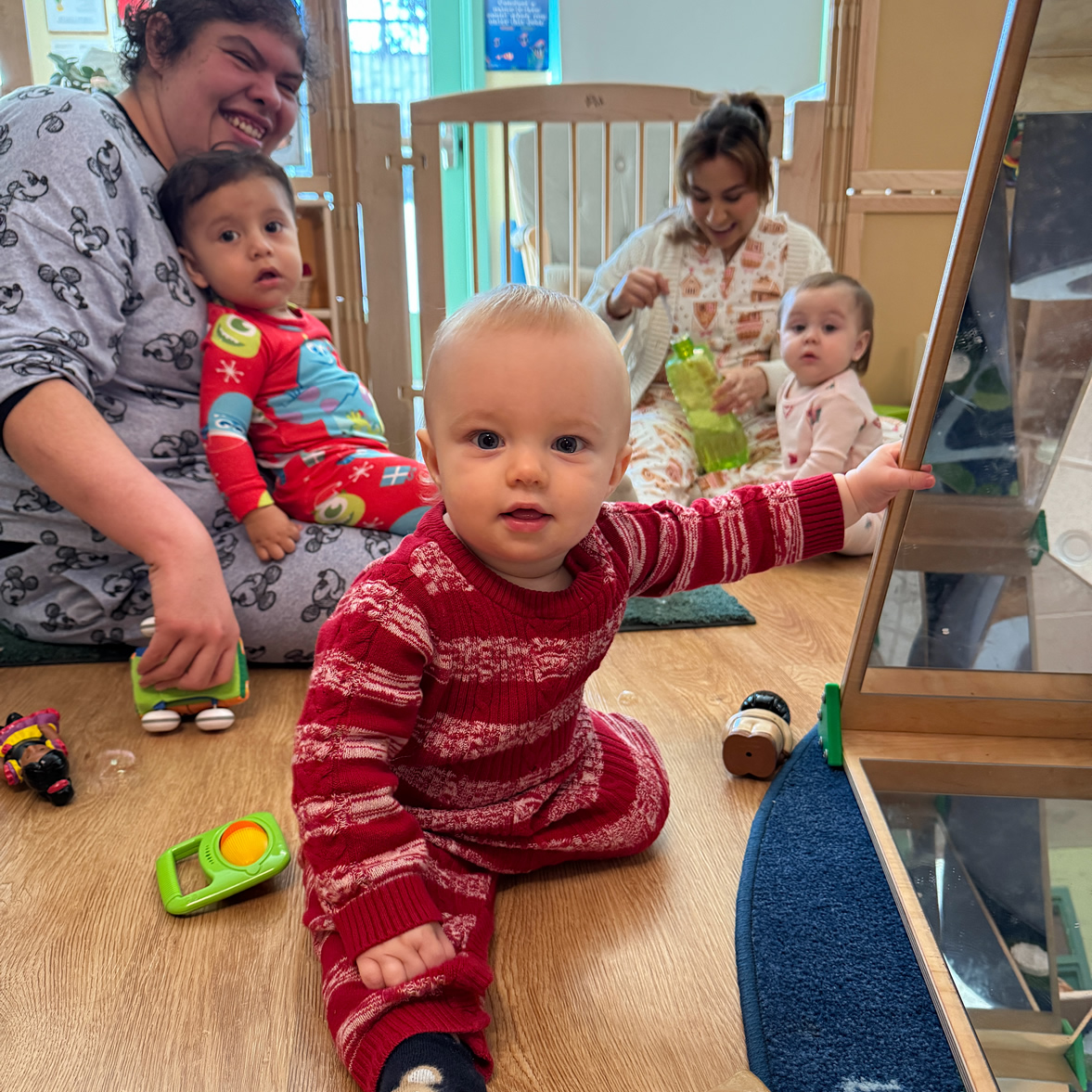
Bedtime can sometimes feel like a challenge, but a consistent nighttime routine helps children feel calm, secure, and ready for rest. Just like adults, children benefit from predictable patterns that guide their body and mind toward sleep. Establishing a routine not only makes evenings smoother but also supports healthy growth and development. A consistent bedtime routine offers many benefits for children.
Promotes Better Sleep
- A predictable routine helps toddlers wind down and signals to their body and brain that it’s time to sleep.
- This reduces bedtime struggles and night wakings.
- Preschoolers need 10–13 hours of sleep daily. A set routine helps their bodies know when it’s bedtime.
Supports Healthy Development
- Quality sleep is essential for brain development, learning, memory, and emotional regulation.
- Growth hormones are released during sleep, supporting physical development.
Provides Emotional Security
- Familiar steps (bath, pajamas, story, cuddle) give toddlers a sense of safety and stability.
- Predictability lowers anxiety and bedtime resistance.
- Consistent routines reduce negotiations and stalling (“just one more show!”) because the order of events is predictable.
Encourages Independence
- Children learn what comes next and can start doing parts of the routine on their own (like picking pajamas or choosing a book).
Strengthens Parent-Child Bond
- Bedtime routines often include reading, cuddling, and talking, which strengthens attachment and creates positive memories.
Example of a 30-40 Minute Bedtime Routine
7:00 PM – Transition Time
Quiet play, no screens (puzzles, coloring, building blocks).
7:15 PM – Wash Up
Bath/shower or face/hands wash, brush teeth, use the potty.
7:25 PM – Pajamas & Choices
Children picks pajamas and maybe a stuffed animal for bedtime.
7:30 PM – Calm Activity
Reading 1–2 picture books, telling a story, or talking about the best part of their day.
7:45 PM – Wind Down
Soft music, lullaby, or cuddles.
8:00 PM – Lights Out
Consistent bedtime to reinforce healthy sleep patterns.
The key is keeping bedtime calm, consistent, and screen-free. With practice, nighttime routines become cherished rituals that set children up for healthy sleep and happy mornings.